Clarks Fork Valley Museum

With immense pride and a deep connection to our heritage, we are thrilled to share the remarkable story of the Fromberg Depot. More than just an old building, this cherished landmark serves as a vibrant symbol of our community's enduring spirit and rich legacy.

The Historic Homesteader’s Cabin one of the most cherished exhibits on our grounds. This remarkable structure, a true relic of our region's pioneering past, originally dates to the rugged 1890s. We were fortunate to relocate it to its current, setting within the museum grounds in 1993, ensuring its preservation for generations to come.

Let me take you back to a crucial chapter in Fromberg's history, to the very essence of our community's growth. On October 19, 1890—a date forever etched in our local narrative—Dr. Benson arrived by train to what was then a thriving, ambitious frontier settlement. With remarkable foresight and a steadfast commitment to public health, he quickly established his medical practice. This was more than just an office; it became a sanctuary of healing, a symbol of hope, and a pivotal landmark marking the beginning of organized medicine in our rugged region.

The Rae School represents an invaluable piece of Montana's foundational history: the pioneer schoolhouse. This remarkable log structure, built in 1889 in Red Lodge, Montana, stands as a tangible testament to a significant era. That same year marked Montana's momentous transition to statehood, making the school a contemporary symbol of the pioneering spirit that shaped our region.

Sheep ranching arrived in Montana during the 1870s, peaking in the 1890s. At that time, it was estimated that Montana boasted 2,352,886 sheep, with Carbon County alone hosting 171,583 sheep. Shepherds embraced a nomadic way of life, and the sheep wagon allowed them to navigate the plains with ease while providing protection from the elements. Historically, these wagons were often shared among entire families, serving as compact homes of the era.

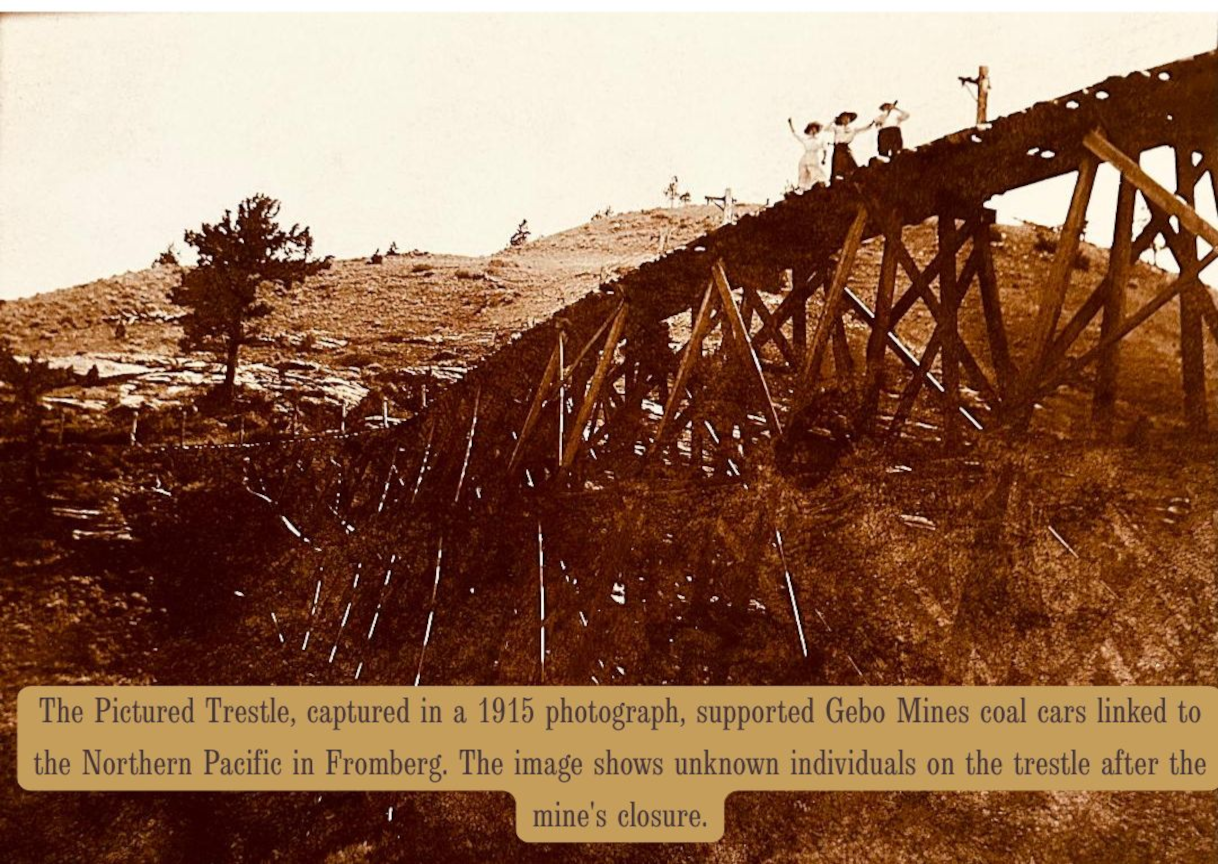
We are excited to announce a remarkable addition to our museum's collection. Soon, visitors will have the chance to discover an intriguing new exhibit showcasing historic mine cars, sourced directly from the site of the once-bustling Gebo Mine. These artifacts embody a crucial part of our region's industrial heritage and highlight the commitment of local preservationists.

The resilient jail structure has its roots in history, dating back to October 27, 1910, when Jake Lowe expertly laid its cornerstone. A skilled builder from Joliet, Montana, Lowe was famed for his innovative cement construction methods. His contributions went far beyond simple construction; he was instrumental in creating a monument that symbolized Fromberg’s steadfast commitment to order and security. Supported by a robust cement foundation, meticulously arranged blocks, and an unwavering dedication to enduring stability, this structure was an engineering marvel of its time. The ceiling showcased sturdy iron bars intricately woven and safeguarded by tin sheeting—designated as "escape-proof."

Discover the intriguing history of the Gebo Cemetery, an essential landmark situated west of Fromberg, Montana. This site stands as the sole remaining testament to the town of Gebo, a once-flourishing mining community founded in 1894 after Samuel Gebo's discovery of coal. The town quickly expanded, featuring a post office, school, newspaper, boarding houses, and saloons; however, its success was short-lived, leading to its decline by 1912.
We would greatly appreciate donations to help us finish our works in progress: Dr. Benson's Office, The Sheep Wagon, The Depot, Museum Grounds.
The museum is open Fridays, Saturdays and Sundays from 11:00 AM to 4:00 PM. (If we're not here, please call the number on the door, and we will come over and open up.)